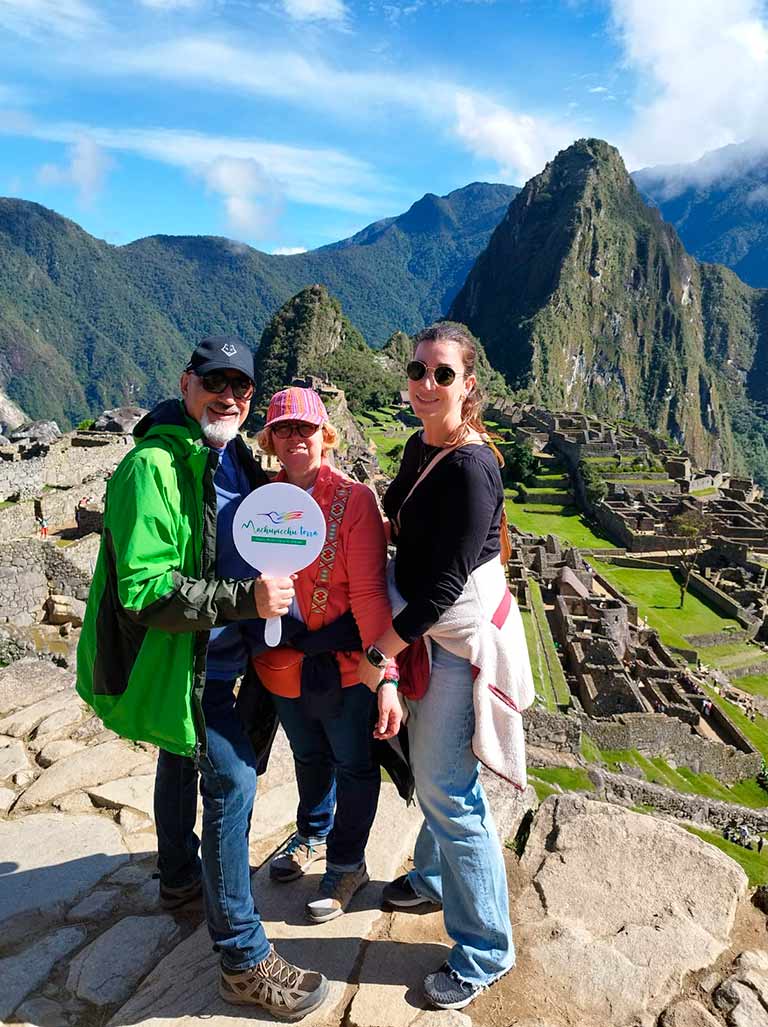
Towns in Peru Where the Inca Heritage Still Lives On
The legacy of the Inca culture remains alive in many territories of the former Tahuantinsuyo Empire, not only through its architecture and agricultural systems, but also through the traditions, customs, and ways of life that many communities continue to preserve to this day. Throughout Peru, there are several regions where this heritage is especially evident. Discover below some of the top destinations where Andean culture continues to be an essential part of local identity.
Contents
Ollantaytambo (Cusco)
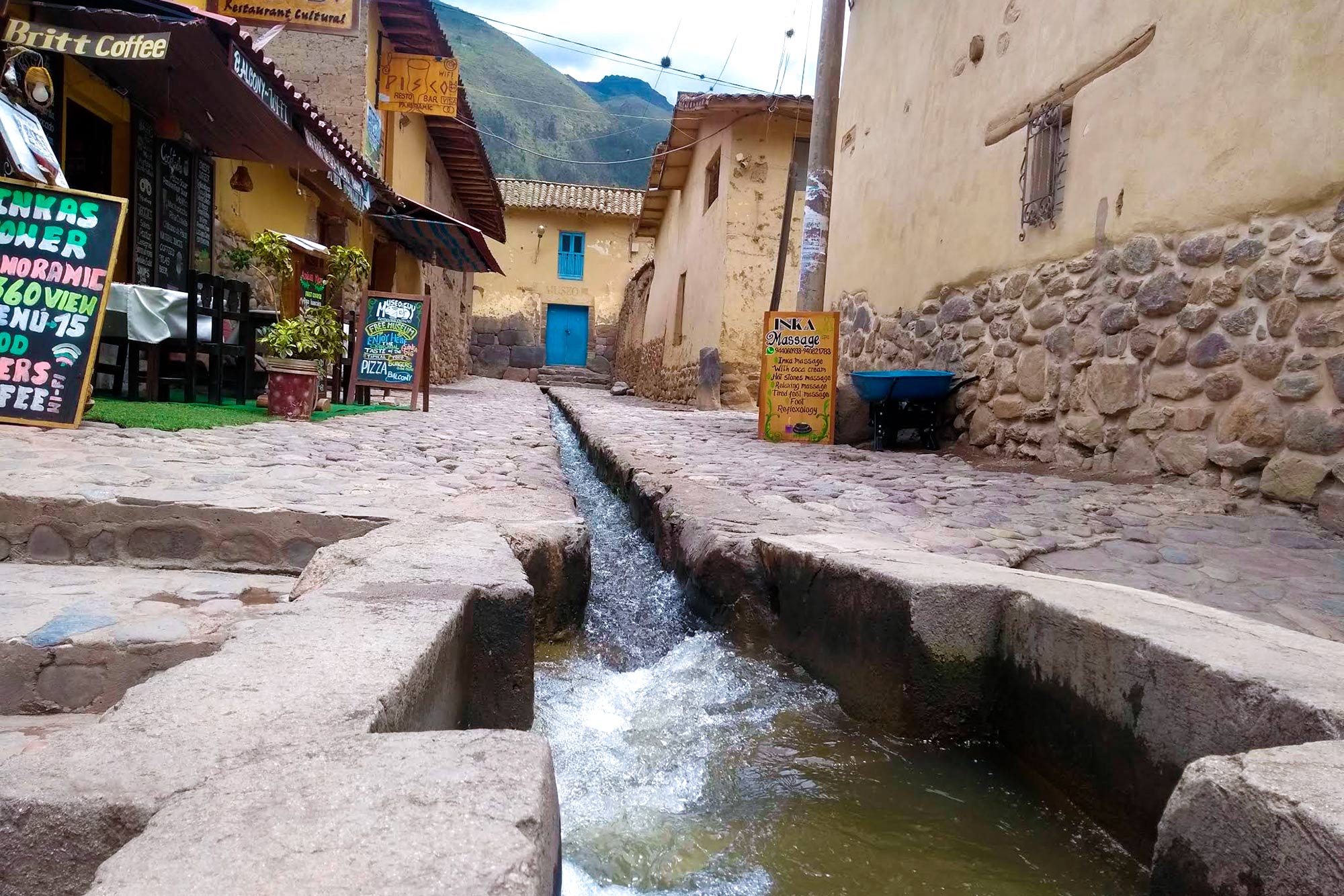
The town of Ollantaytambo is one of the best examples of the ancient urban design of the Inca Empire. As you walk through its stone streets, you can admire an impressive archaeological fortress in the mountains, along with ancient walls, original house foundations, water canals (still functioning today), and agricultural terraces.
Ollantaytambo also preserves a strong Andean cultural tradition, where most of the population speaks Quechua (in addition to Spanish), engages in agricultural activities, and maintains a worldview deeply connected to community reciprocity and nature.
Another of its most remarkable features is its proximity to communities where visitors can enjoy immersive cultural experiences and traditional activities, such as in Huilloc and Patacancha, known for preserving ancestral weaving techniques and Quechua customs.
- Location: Sacred Valley of the Incas, in the province of Urubamba, at more than 2,792 meters above sea level.
- Historical attractions:
- Ollantaytambo archaeological site.
- Pinkuylluna archaeological site.
- Pumamarka archaeological site.
- Living cultural traditions:
- Daily use of the Quechua language.
- Traditional Andean agriculture.
- Ancestral weaving techniques.
- Religious and Andean festivals.
- Communal work and community reciprocity.
- What makes it unique:
- It preserves one of the best-preserved Inca urban layouts.
- Many of the original structures are still used by the local population.
Chinchero (Cusco)
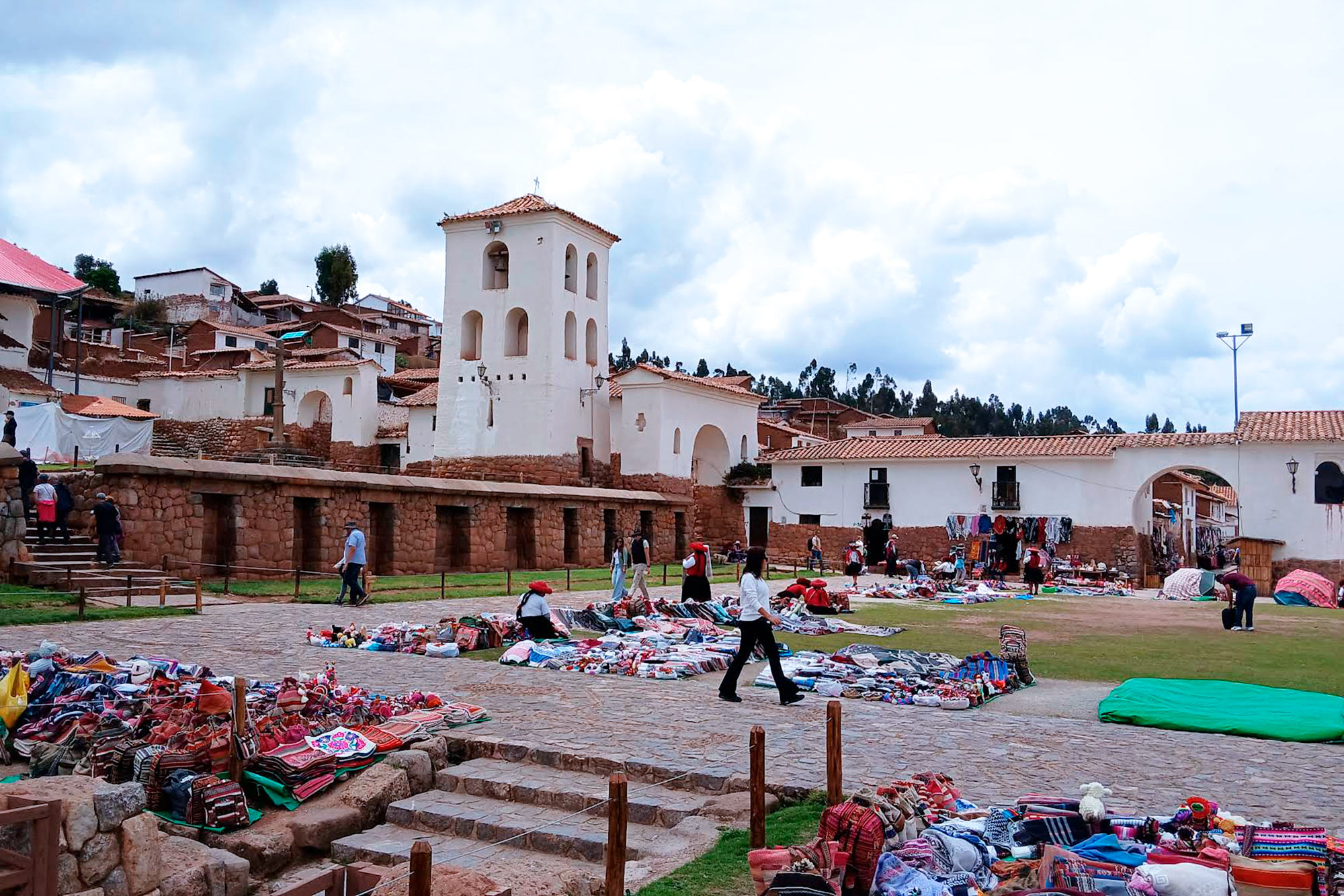
The town of Chinchero is one of the top destinations in Cusco. It is well known for its textile tradition and for being home to an important archaeological site from the Inca period. Its main streets still preserve ancient stone walls, and the surrounding area features numerous agricultural terraces that reflect its historical significance.
In Chinchero, many families continue to preserve ancestral weaving and dyeing techniques, which serve as their main source of livelihood, offering immersive cultural experiences and the opportunity to purchase unique handmade garments. The Quechua language also remains widely spoken among the local population.
Another notable aspect is the blend of colonial and Inca architecture, especially visible in the main square and in the Church of Our Lady of Monserrat, built on top of the former palace of the Inca Tupac Yupanqui.
- Location: Sacred Valley of the Incas, in the province of Urubamba, at approximately 3,760 meters above sea level.
- Historical attractions:
- Chinchero archaeological site.
- Church of Our Lady of Monserrat (former palace of Inca Tupac Yupanqui).
- Machuqolqa terraces.
- Cuper Bajo archaeological site.
- Living cultural traditions:
- Ancestral weaving techniques.
- Use of natural dyes.
- Traditional agriculture.
- Craft fairs.
- Religious and Andean festivals.
- Communal work and community reciprocity.
- What makes it unique:
- It preserves one of the most representative textile traditions in Peru.
- It maintains a strong Andean identity within the Sacred Valley.
- It combines Inca and colonial architecture.
Vilcashuamán (Ayacucho)
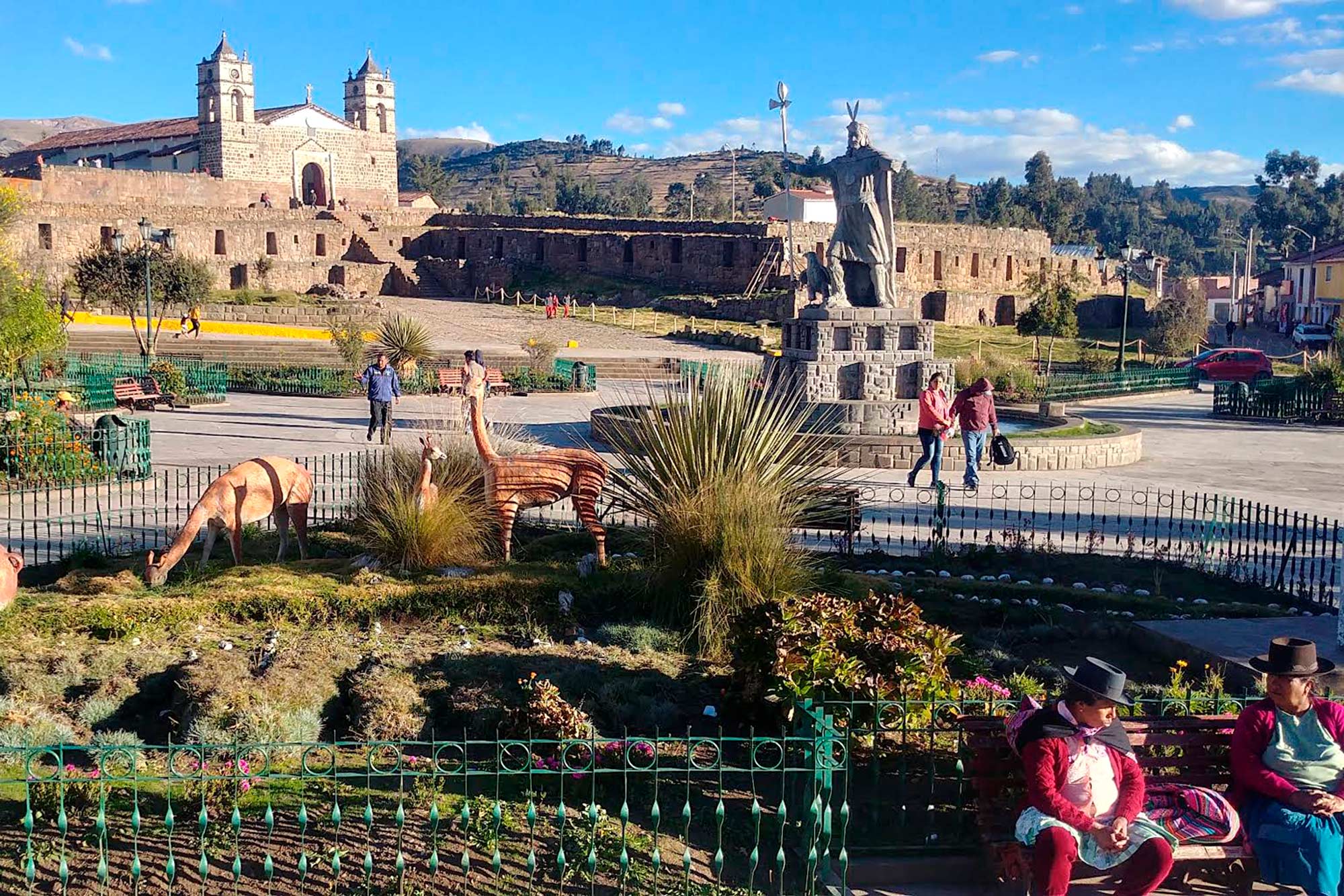
The small city of Vilcashuamán was one of the main administrative and ceremonial centers of the Inca Empire outside of Cusco. Located in the ancient region of Chinchaysuyo, this place preserves monumental structures of great importance along with a strong Andean cultural identity.
Vilcashuamán preserves the original Inca urban layout, and several buildings still retain their historic foundations. The area also keeps the Quechua language and many ancestral traditions alive.
- Location: Ayacucho Region, in the province of Vilcashuamán, at more than 3,000 meters above sea level.
- Historical attractions:
- Ceremonial Ushnu altar.
- Temple of the Sun and Moon.
- Church of San Juan Bautista (former Temple of the Sun).
- Inca Baths.
- Living cultural traditions:
- Syncretic festivals.
- Use of the Quechua language.
- Traditional agriculture.
- Traditional music and dances.
- Communal customs.
- What makes it unique:
- It was one of the main political centers of the Tahuantinsuyo Empire.
- It preserves monumental structures.
- It maintains an important cultural continuity in Ayacucho.
Huari (Áncash)
Several towns in Áncash, including Huari, preserve important Andean traditions connected to the ancient Inca road system known as the Qhapaq Ñan. Although this region was heavily influenced by pre-Inca cultures, the Inca presence can still be seen in its agriculture, festivals, and communal way of life.
The areas surrounding Huari feature high-altitude agricultural landscapes alongside ancient stone paths. Its customs, religion, and language differ from those of the main Inca territories, since the Spanish conquest reached this region while the process of cultural adaptation was still unfinished.
- Location: Áncash Region, province of Huari, at approximately 3,149 meters above sea level.
- Historical attractions:
- Chavín de Huántar archaeological complex.
- Sections of the Qhapaq Ñan in Áncash.
- Traditional agricultural terraces.
- Living cultural traditions:
- Use of the Quechua language.
- Traditional farming and herding.
- Syncretic festivals.
- Communal work.
- What makes it unique:
- It preserves Andean traditions in a lesser-known tourist region.
- It maintains ancient agricultural practices adapted to the Andes.
Taquile (Puno)
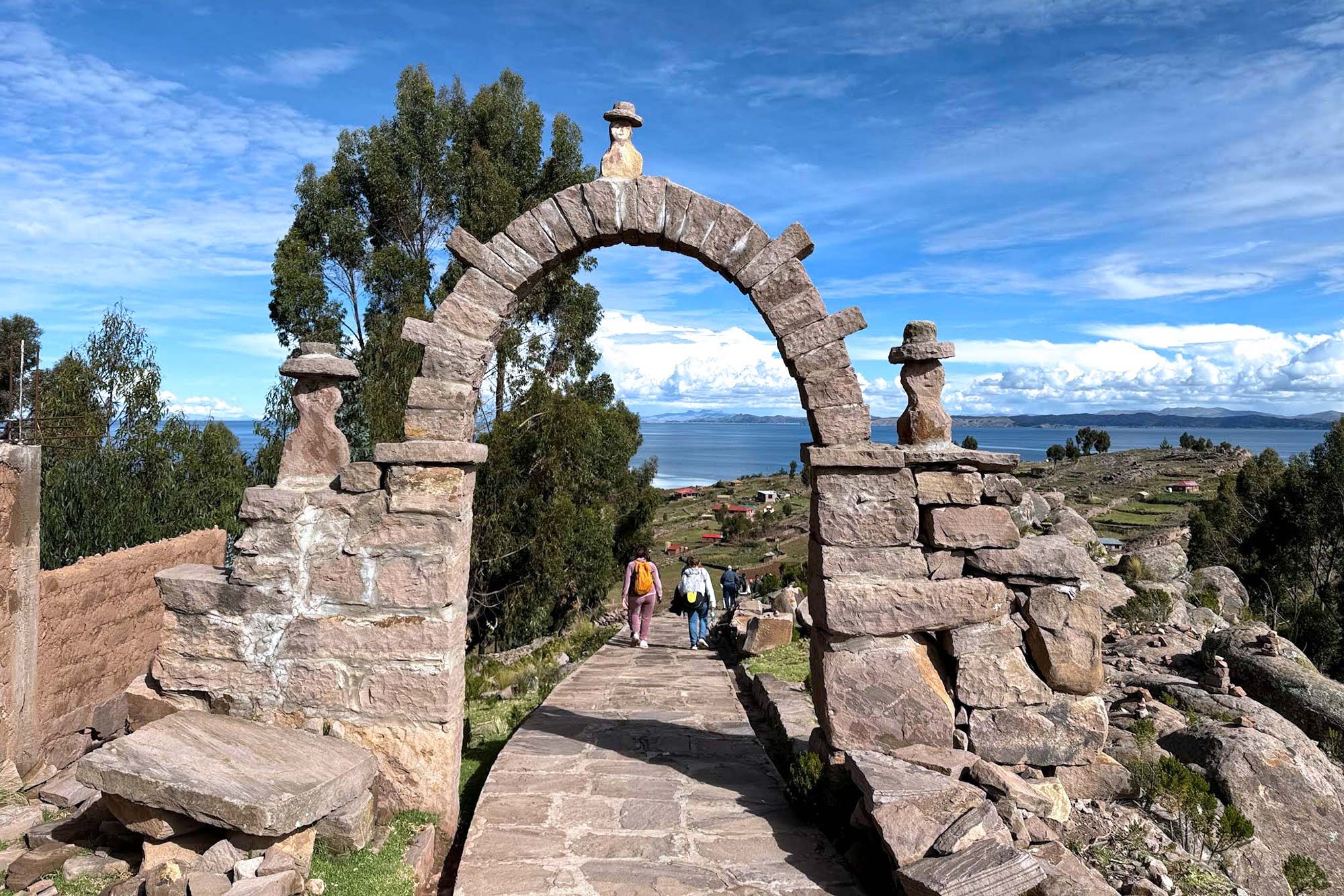
Taquile Island is one of the places where Andean cultural traditions are best preserved on Lake Titicaca. Its inhabitants maintain communal forms of organization, ancestral weaving techniques, and customs passed down through generations that continue to be part of daily life.
The agricultural terraces built along the island’s slopes, together with historic stone paths and traditional homes, reflect its deep Andean roots. Life on the island still revolves around collective work, agriculture, and communal activities, preserving a strong cultural identity.
- Location: Lake Titicaca, in the Puno region, at 3,950 meters above sea level.
- Historical attractions:
- Agricultural terraces.
- Taquile stone path.
- Pre-Hispanic archaeological remains on the island.
- Traditional communal centers.
- Living cultural traditions:
- Traditional handcrafted weaving.
- Andean communal organization.
- Use of the Quechua and Aymara languages.
- Traditional agriculture.
- What makes it unique:
- It preserves one of the most important textile traditions of the Altiplano.
- It maintains ancestral forms of communal organization.
- Natural landscapes with deep ancestral roots.
Chivay (Arequipa)
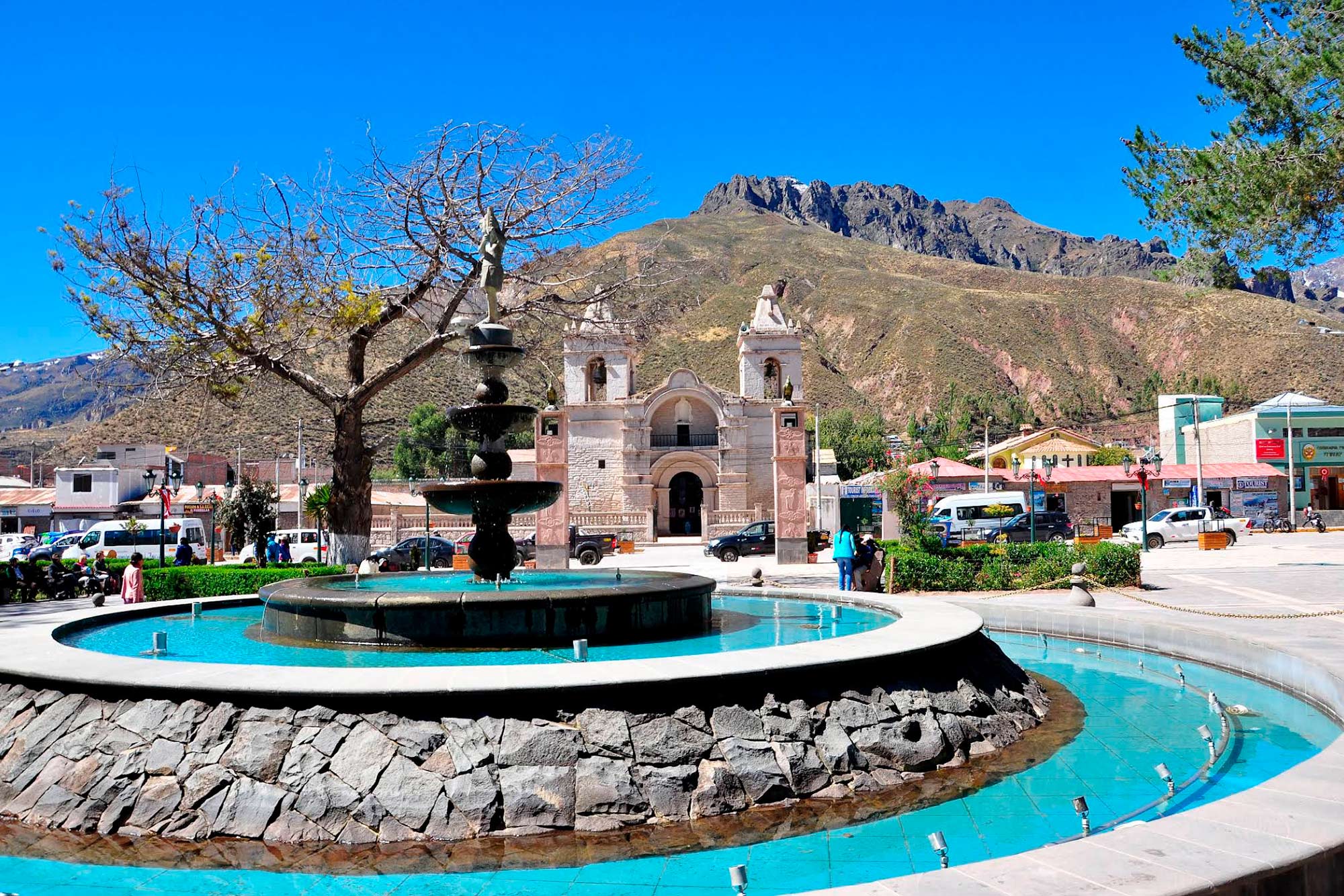
The towns of the Colca Valley preserve one of the most important Andean agricultural landscapes in Peru. Since pre-Hispanic times, the inhabitants of this region developed extensive systems of agricultural terraces and hydraulic canals that were later used and expanded during the Inca period.
In nearby towns such as Chivay, Yanque, and Coporaque, these terraces are still used by local communities, which also continue to preserve many traditions related to agriculture and Andean festivals.
- Location: Arequipa Region, in the province of Caylloma, at more than 3,635 meters above sea level.
- Historical attractions:
- Agricultural terraces of the Colca Valley.
- Uyo Uyo archaeological site.
- Andean colonial churches.
- Historic sections of the Qhapaq Ñan.
- Living cultural traditions:
- Traditional Andean agriculture.
- Syncretic festivals.
- Communal agricultural work.
- What makes it unique:
- It preserves one of the largest terrace systems in Peru.
- Strong cultural identity throughout the valley’s towns.
- Presence of breathtaking Andean landscapes.
Frequently Asked Questions
- Which towns in Peru best preserve the Inca heritage?
Some of the most representative destinations are Ollantaytambo, Chinchero, Vilcashuamán, Taquile, and several towns in the Colca Valley in Arequipa. These places still preserve architecture, traditions, and ways of life connected to the ancient Andean world.
- Where can I see original Inca constructions in Peru?
One of the best places to appreciate original Inca constructions is Ollantaytambo, where streets, water canals, and house foundations from the Inca period still remain. Archaeological sites in Chinchero and various sectors of the Sacred Valley are also notable.
- In which places in Peru is Quechua still spoken?
Quechua continues to be spoken in many Andean regions of Peru, especially in communities in Cusco, Ayacucho, Puno, and Áncash. In towns such as Ollantaytambo, Chinchero, and Vilcashuamán, it is still part of everyday life.
- Which town in Peru best preserves Inca urban planning?
Ollantaytambo is considered one of the best-preserved examples of Inca urban planning. Its stone streets, hydraulic canals, and original layout continue to be used by current residents.
- Where can I experience traditional Andean communities in Cusco?
Near Ollantaytambo, there are communities such as Huilloc and Patacancha, known for preserving ancestral weaving techniques and Quechua traditions. In Chinchero, visitors can also participate in cultural experiences related to weaving and agriculture.
- What importance did Vilcashuamán have in the Inca Empire?
Vilcashuamán was one of the main administrative and ceremonial centers of the Tahuantinsuyo outside of Cusco. Today, it still preserves important ceremonial structures and part of its original urban layout.
- What is the Qhapaq Ñan and where can it be visited?
The Qhapaq Ñan was the extensive road network built by the Incas to connect different regions of the empire. Preserved sections can still be found in Cusco, Áncash, Ayacucho, and Arequipa.
- What is the best time to visit the Andean towns of Peru?
The dry season, between April and October, is usually the best time to explore Andean towns and archaeological sites. During these months, there is less rain and better conditions for hiking and cultural activities.
- What cultural activities can I do in these towns?
In many Andean towns, visitors can participate in textile experiences, agricultural activities, hikes along ancient Inca trails, and traditional festivals. Some communities also offer immersive cultural tourism and live cultural demonstrations.
- Why are Peru’s Andean towns important for understanding Inca culture?
These towns help visitors understand how many traditions of the ancient Tahuantinsuyo are still present in everyday life. Their architecture, language, agriculture, and festivals reflect the Andean cultural continuity that has endured throughout the centuries.
By Machupicchu Terra – Last updated, May 20, 2026
All-inclusive Machu Picchu Tour!
- ✔ Hotel pickup
- ✔ Train journey through the Sacred Valley
- ✔ Specialized bilingual guide
- ✔ Entrance to Machu Picchu
Enjoy an unforgettable experience in Machu Picchu on a 1-day tour. Discover the Temple of the Sun, the Intihuatana, and other Inca structures surrounded by unique landscapes. Includes entrance to Machu Picchu and special benefits for students.